


These pipes are manufactured in PE 63, PE 80, and PE 100 grades, as per IS:14333-2022.
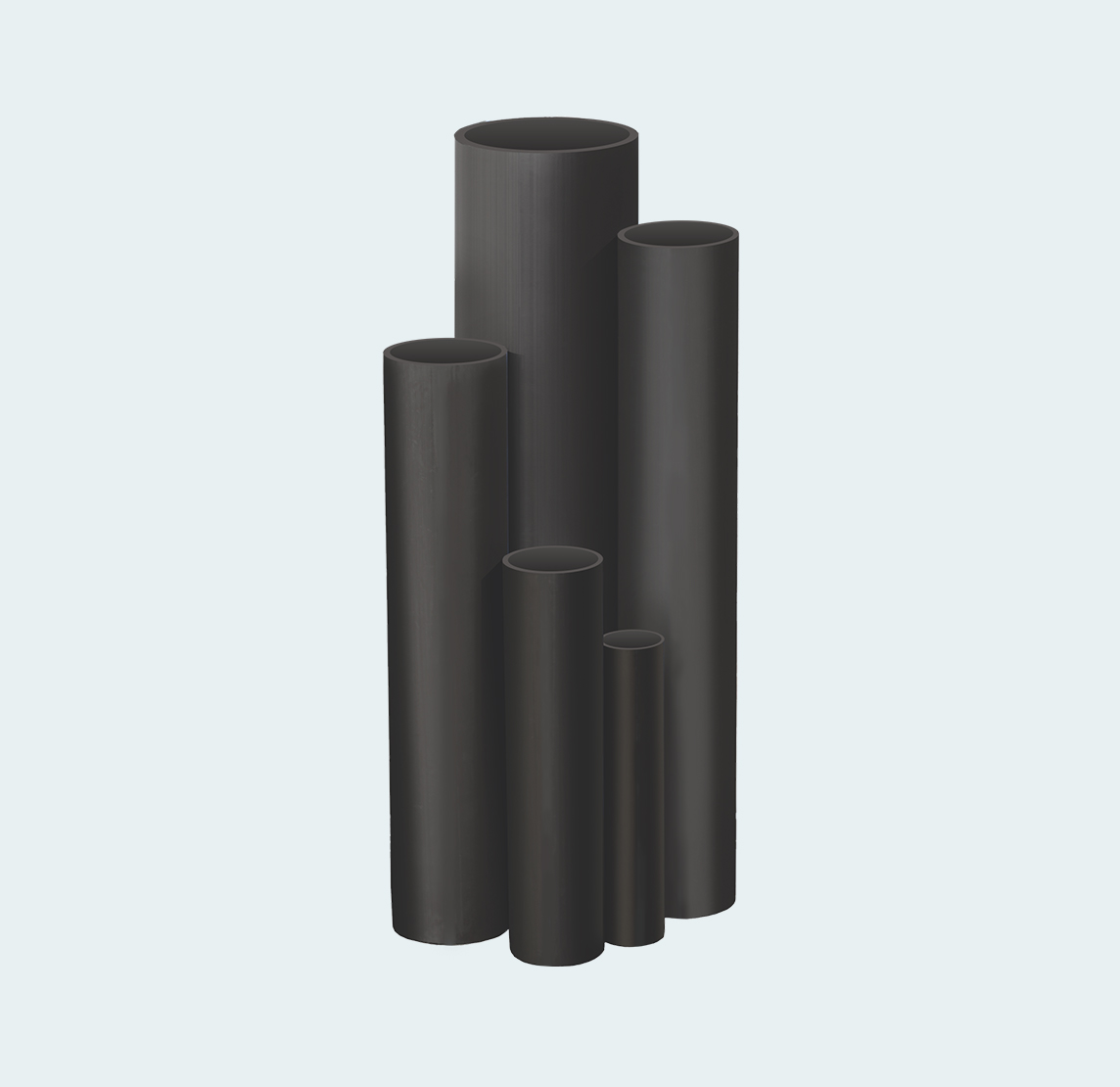
High-density Polyethylene (HDPE) Pipes For Sewerage Systems
Beyond our diverse range of pipes, Supreme proudly presents HDPE high density polyethylene pipes, specifically designed for demanding sewerage applications. Whether you require PE pipes for gravity flow or pressurized sewerage systems, our HDPE solutions offer unmatched strength and reliability. Manufactured according to IS 14333 standards, these HDPE sewage pipes ensure lasting performance and peace of mind. Supreme HDPE pipes seamlessly integrate with butt welding methods, facilitating easy and secure installation. Their robust construction resists corrosion, chemicals, and harsh environments, making them ideal for both underground and above-ground applications.
Polyethylene (PE) pipes are available from 63 to 630mm sizes in PN 2.5 to PN 16 pressure classes, conforming to IS 14333.

FILTER
No products available.
What Are HDPE Pipes for Sewerage Systems Used For?
Supreme's high density polyethylene pipes are manufactured for sewerage and drainage applications where corrosion resistance and flexibility matter as much as strength. Compliant with IS 14333:2022, these HDPE pipes support both gravity flow and pressurised sewerage systems, making them suitable for municipal, industrial, and infrastructure projects that move wastewater or industrial effluent. As hdpe pipes for sewerage systems, they are built to handle the higher temperature and chemical exposure that sewerage and effluent lines face compared to standard water supply pipes.
What Sizes and Pressure Classes Are Available?
Supreme offers polyethylene pipes in sizes ranging from 63mm to 800mm, across pressure classes from PN 2 to PN 20, manufactured in PE 63, PE 80, and PE 100 grades as per IS:14333-2022. Each grade and pressure class is matched to a specific wall thickness, following the standard dimension ratio (SDR) system, so a buyer can select a pipe rated for the exact pressure and application at hand rather than over-specifying the line. Pipes are supplied in standard 6-metre lengths.
How Are HDPE Sewerage Pipes Jointed?
Jointing method affects both installation speed and long-term leak performance. Supreme's HDPE pipes are joined using either click ring-type fittings or butt welding, giving installers a choice between a mechanical push-fit connection and a fused, permanent joint. Butt welded hdpe pipes for drainage create a homogenous connection at the joint, with strength matching that of the pipe itself, which is particularly useful on pressurised sewerage lines where joint integrity is critical.
Why Choose HDPE for Underground or Above-Ground Sewerage Lines?
HDPE's flexibility is what makes it suitable for undulating terrain, where the pipeline route has to follow uneven ground rather than a straight, level path. Unlike rigid pipe materials, HDPE can flex slightly along its length without cracking at the joints, reducing the risk of failure in shifting or uneven soil conditions. The material also resists corrosion, chemicals, and the harsh conditions typical of sewerage and industrial effluent lines, and performs reliably in both underground and above-ground installations.
Where Are These Pipes Used?
Sewerage and drainage pipes from this range serve municipal sewerage networks, industrial effluent lines, and drainage infrastructure projects, wherever a gravity-flow or pressurised system needs to move wastewater reliably over time. For underground drainage pipe installations specifically, the combination of IS 14333:2022 compliance, a wide pressure-class range, and flexible jointing options gives project engineers a single specification to work from across varying site conditions and pipeline depths.
Frequently asked questions
What sizes are available in HDPE pipes for sewerage systems?
Supreme's HDPE pipes for sewerage systems are available in sizes ranging from 63mm to 800mm.
What length are HDPE sewerage pipes supplied in?
Supreme's HDPE pipes for sewerage are supplied in standard 6-metre lengths.
What is the maximum pressure rating available for HDPE sewerage pipes?
The maximum pressure rating available is PN 20, achieved at SDR 6 in the PE 80 grade.
What does PN stand for in pipe pressure ratings?
PN stands for nominal pressure, expressed in bar. It indicates the maximum working pressure a pipe of a given SDR and material grade is rated to handle.
Does the pipe's pressure rating depend on its diameter?
The pressure rating is determined by the SDR, which is the ratio of diameter to wall thickness, rather than diameter alone. To maintain a given pressure class across different pipe sizes, wall thickness increases as diameter increases.
What is the minimum pressure class available for these HDPE pipes?
The minimum pressure class available is PN 2, available in the PE 63 grade at SDR 41.
Can HDPE sewerage pipes be joined without welding?
Yes. Supreme's HDPE pipes can be joined using click ring-type fittings as an alternative to butt welding, giving installers a mechanical push-fit option alongside the fused joint method.
What is SDR in HDPE pipes?
SDR stands for standard dimension ratio, which relates a pipe's outer diameter to its wall thickness. A lower SDR value means a thicker wall relative to the diameter, which corresponds to a higher pressure rating.
What is the difference between solid wall and structured wall pipes?
A solid wall pipe has a uniform wall thickness throughout its cross-section, while a structured wall pipe, such as a corrugated or ribbed design, uses a shaped wall profile to achieve stiffness with less material. Supreme's HDPE pipes for sewerage under IS 14333:2022 are solid wall pipes.